
How to Build a Better Hunting Arrow - According to the Data
Arrow builds are one of the most debated topics in bowhunting. Everyone has an opinion and most of those opinions aren't backed by much. That changed when James Yates at Western Hunter, Tristan Litke at Precision Cut Archery, and a team of dedicated partners decided to actually test it, twice.
HUNTEDUCATIONSHOOT

Who Did This Work and Why It Matters
This needs to be said clearly up front: this is not my research. I'm just the guy who studied it, and wanted to make it easier for other hunters to use by creating an easier to understand PDF HERE.
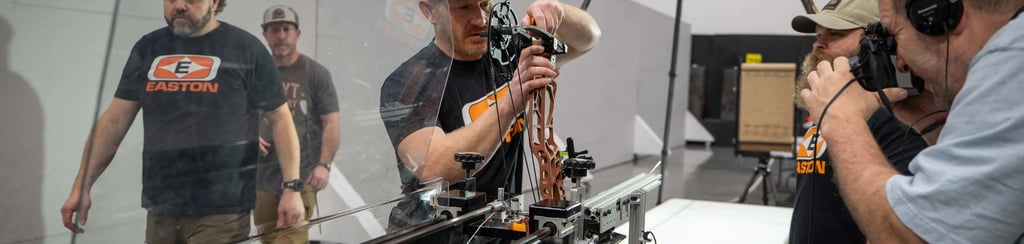
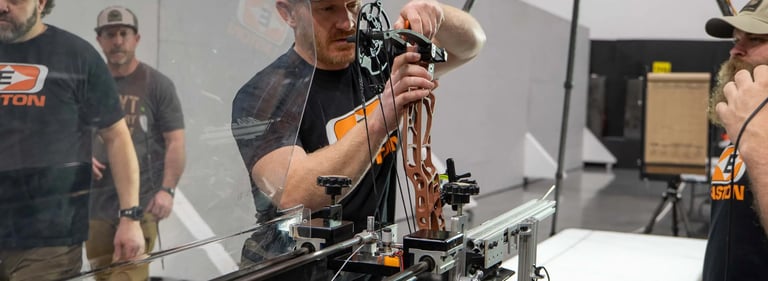
The brains and the grind behind this study belong to James Yates, engineering consultant, backcountry bowhunter, and contributor to Western Hunter, and Tristan Litke of Precision Cut Archery, who built the data collection software, ran the regression analysis, and created the interactive result plots that make this whole thing navigable. But this was a full team effort and every person involved deserves credit.
Easton Archery provided primary funding, shafts, engineering support, and their precision shooting machine, without which none of the controlled testing would have been possible. Hoyt donated four AX-3 33 test bows and personnel support, and their XTS tuning system was critical to keeping the testing moving efficiently across hundreds of different arrow builds. Jace Johnson personally fletched nearly 1,000 arrows across both studies to an exacting standard. And Jamie McIntosh at the Archery Sound Lab handled all of the acoustic testing in a purpose-built sound chamber, bringing a degree in acoustics and the obsession to match. That's the team. Give them all credit when you share this.
What They Actually Tested
Three core metrics drove the component testing across both studies. Aerodynamic drag is the force slowing your arrow down, and more drag means more wind drift and more drop at distance, with every component you add contributing to it. Corrective lift is how well your vanes steer a broadhead-tipped arrow back on course when the shot isn't perfect, which is the metric that matters most in a real hunting situation. And sound was measured not just for human ears, because the Archery Sound Lab weighted every measurement against whitetail deer hearing frequency sensitivity since deer hear differently than we do and the rankings shift meaningfully when you account for that.
The setup was a Hoyt AX-3 33, Easton shafts, a precision shooting machine that eliminates human error entirely, and a consistent 70-yard test distance. No guessing, no opinion, just repeatable data shot after shot.
What the Vane Data Says
This is where a lot of hunters are leaving performance on the table without knowing it. A few findings from the data stand out above everything else.
2° helical is the sweet spot. It delivers better broadhead steering than straight fletching and comes in quieter and lower drag than 4°, confirmed across both years of testing. If you're not running some helical you're giving up corrective lift for no real benefit, and if you're running 4° you're paying a drag and noise penalty that doesn't buy you much over 2°.
Straight fletching with fixed blades is a mistake the data is pretty clear about. Zero-degree straight produced the worst broadhead steering of any configuration tested in every single vane across both studies. The low drag numbers look attractive on paper but they don't matter if your fixed blade is planing off target.
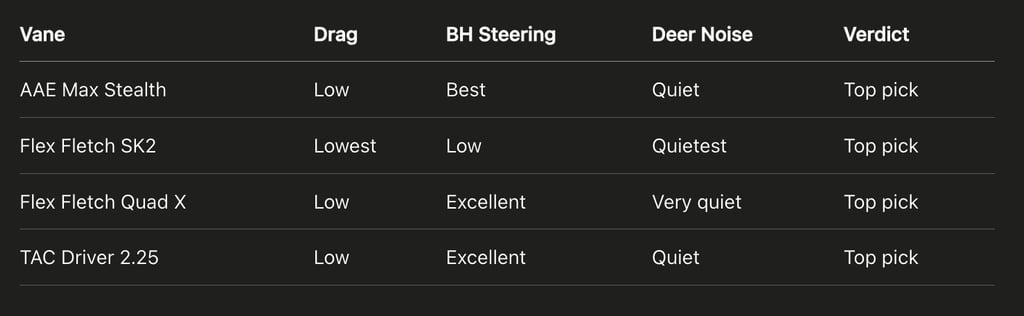
3-fletch also outperformed 4-fletch for most setups. Adding a 4th fletch cost an average of 7% more drag for less than one inch of broadhead steering improvement across all vanes tested. The Flex Fletch Quad X, one of the top-performing vanes in the study, actually steered worse with four fletch, not better. Unless you're running a very specific setup that benefits from the extra correction, 3-fletch is the right call.
Top vane picks straight from the data:
One more thing worth knowing: clocking your vanes to match your bow's natural torque direction, matching helical direction to the way your bow naturally twists under a bad release, reduced broadhead drift and tightened groups measurably in the 2026 study. It costs nothing and requires no equipment change.
What the Broadhead Data Says
Start with the most important finding because it affects every single one of you. No broadhead in either study hit to the same point of impact as field points at distance. Not one. Every broadhead adds enough aerodynamic drag to shift your point of impact meaningfully past 40 yards, which means you need a dedicated broadhead sight tape if you're shooting past that distance.
On the fixed blade side, the Iron Will Vented and Iron Will S100 led the category with the lowest drag of any fixed blade tested, tightest groups, and quietest to deer. The G5 Montec M3 and QAD Exodus Full Blade are strong alternatives with solid drag numbers and reliable accuracy. The Toulou sat at the opposite end of the spectrum with the highest drag, loudest sound signature to deer, and widest groups of any fixed blade tested.
In the mechanical category, the Sevr 1.5, Sevr Hybrid 1.5, and Sevr 2.0 were the clear leaders, the quietest mechanicals tested and tightest groups at both standard and high speed. As a category, mechanicals grouped tighter on average than fixed blades, which is worth knowing even if terminal performance is a completely separate conversation this study didn't cover.
One note on speed worth flagging: broadheads that flew poorly at 280fps got worse at 325fps, not better. Speed amplifies instability. If your broadhead isn't flying clean at normal speed, a faster bow won't fix it.
The FoC Finding That Should Change How You Build Arrows
Front-of-Center is one of the most argued topics in archery and the 2026 study is the first to isolate its effect through regression analysis while holding arrow weight, spine, and speed constant. The headline number is r = 0.80 correlation between FoC percentage and broadhead group tightness under an imperfect release, one of the strongest statistical findings across either study. In plain language, the higher your FoC the tighter your broadhead groups when you make a bad shot, and a bad shot is exactly what happens when you're at full draw on a giant buck at 55 yards with your heart in your throat.
The practical targets coming out of the data are 15 to 20%+ FoC for a fixed-blade hunting setup. Higher FoC doesn't replace good vane selection though, both variables matter and they work together. And don't just pile on point weight to chase FoC numbers, because weakening your dynamic spine too much will hurt accuracy more than the FoC gain helps. Cutting your arrow shorter before going heavier on the front, and respecting your spine chart, is the smarter way to get there.
For western hunters the honest tradeoff is real: more front weight means a slower, heavier arrow, which affects trajectory and range forgiveness at distance. James talks about this directly in his write-up. There's a balance to find based on your personal setup and how far you're shooting, and the data gives you the framework to make that call intelligently.
The Arrow Noise Section Most Hunters Skip
James Yates has talked about this more than almost anyone in the industry and the 2026 study data backs him up. Vane noise matters even after you screw on a broadhead. The study paired the quietest vane with quiet and loud broadheads, then did the same with the loudest vane, and the result was clear: a quiet vane with a quiet broadhead produced a measurably quieter overall arrow. There was nearly a 15 dB spread between the loudest and quietest broadhead setups tested, which on a logarithmic scale is close to three times the perceived loudness difference to a deer.
If you're hunting pressured public land mule deer on spot-and-stalk setups, close range, no wind, animals that are already keyed up, a loud arrow is a real liability. Pairing a quiet vane like the SK2 or Max Stealth with a low-profile broadhead like the Iron Will Vented isn't just a performance choice, it's a hunting decision. Build quiet on purpose.
Go Deeper
Everything covered here barely scratches the surface of what James, Tristan, and the full team put together. Go read James Yates' full breakdown at Western Hunter and check out the interactive data plots Tristan built at Precision Cut Archery. The interactive version of those plots where you can hover over individual data points and pull up photos of actual arrow groups is genuinely worth your time.
I also put together a free downloadable PDF that compiles both the 2025 and 2026 study results into one clean reference document covering every metric, every vane, and every broadhead without the jargon. Whether you're building your first hunting arrow or dialing in a custom setup for elk season, the data is in there.
Download the Full Arrow Ballistics Study Field Guide — Free — Data Pulled From Precision Cut Archery
Use the data. Build better arrows.
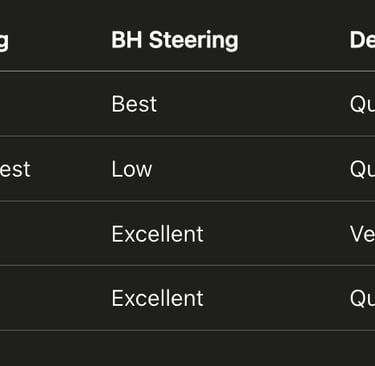
(Image Credit - Precision Cut Archery)

More Hunting Blogs


JOIN THE COMMUNITY